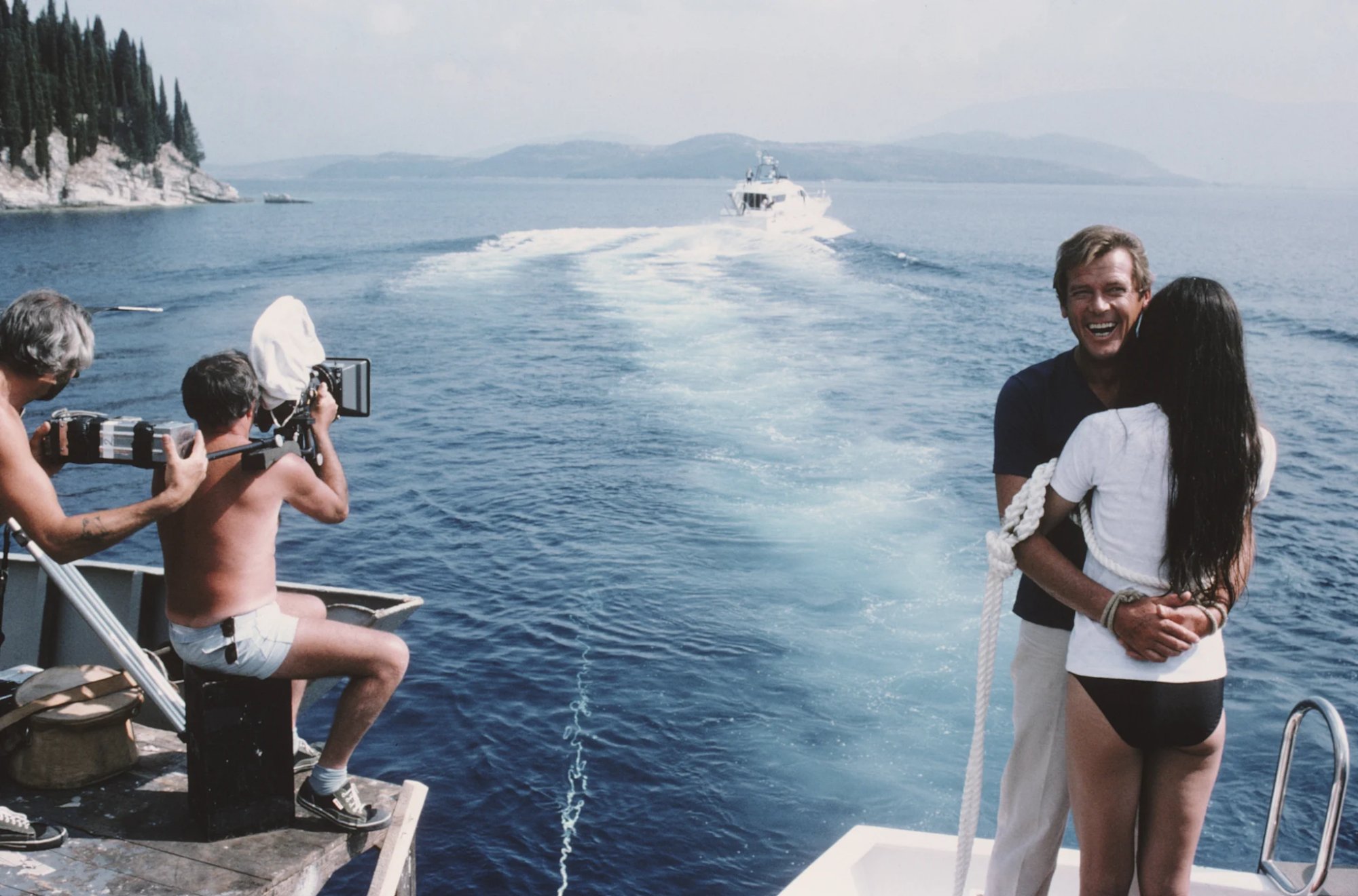
The twelfth James Bond film brought 007 back to basics: fewer gadgets, more suspense. Director John Glen — who had already worked on five Bond films as second unit director and editor — made his directorial debut here. Unlike the over-the-top science fiction spectacle of Moonraker, Glen deliberately chose a more serious, grittier approach: rawer, more believable, with the emphasis on real locations and danger on a human scale. For the August 1981 issue of American Cinematographer, five people behind the scenes shared their experiences: director of photography Alan Hume, director John Glen, ski cameraman Willy Bogner, VFX cameraman Paul Wilson and second unit director Jimmy Devis.
The cinematography: Alan Hume, BSC
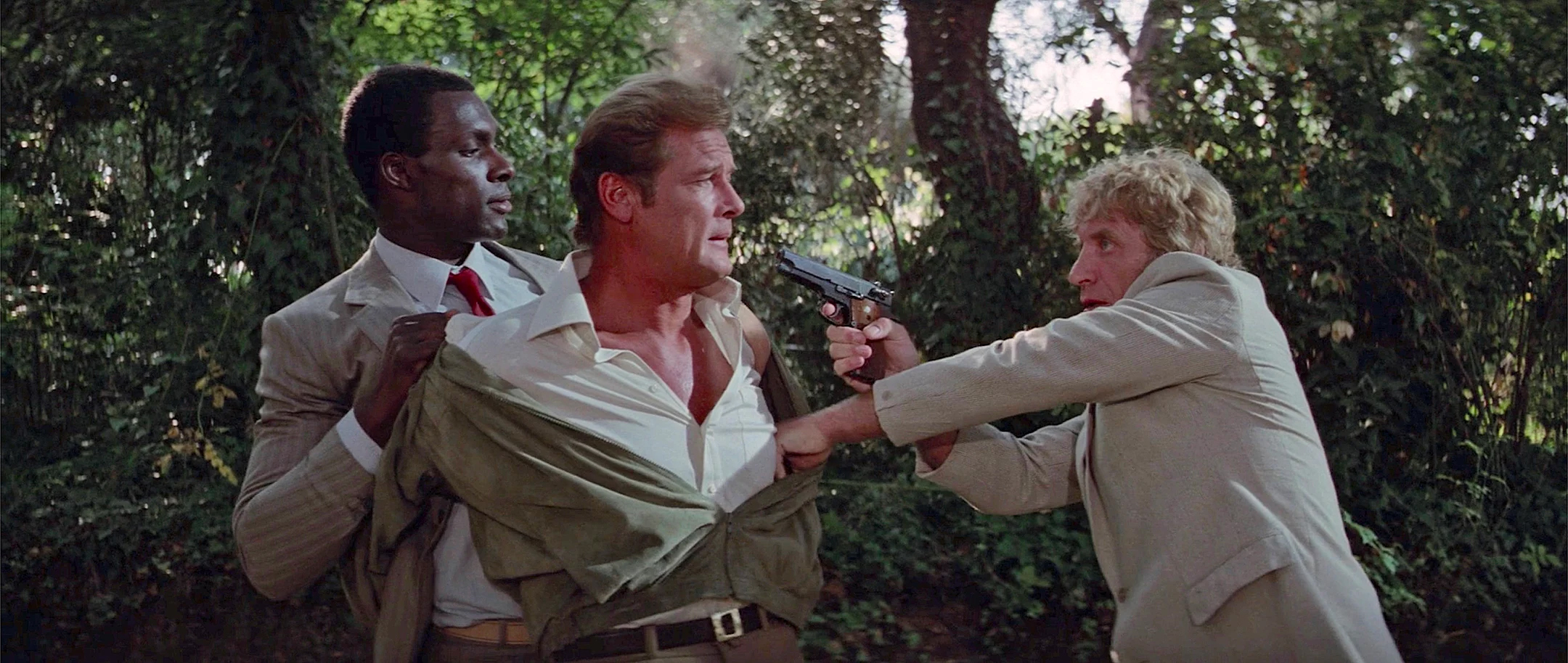
To be given the job of photographing a James Bond picture is quite an achievement in itself. Alan Hume felt that keenly when director John Glen and producer Albert “Cubby” Broccoli asked him to serve as director of photography on For Your Eyes Only. Hume was a past president of the British Society of Cinematographers and accepted the invitation wholeheartedly.
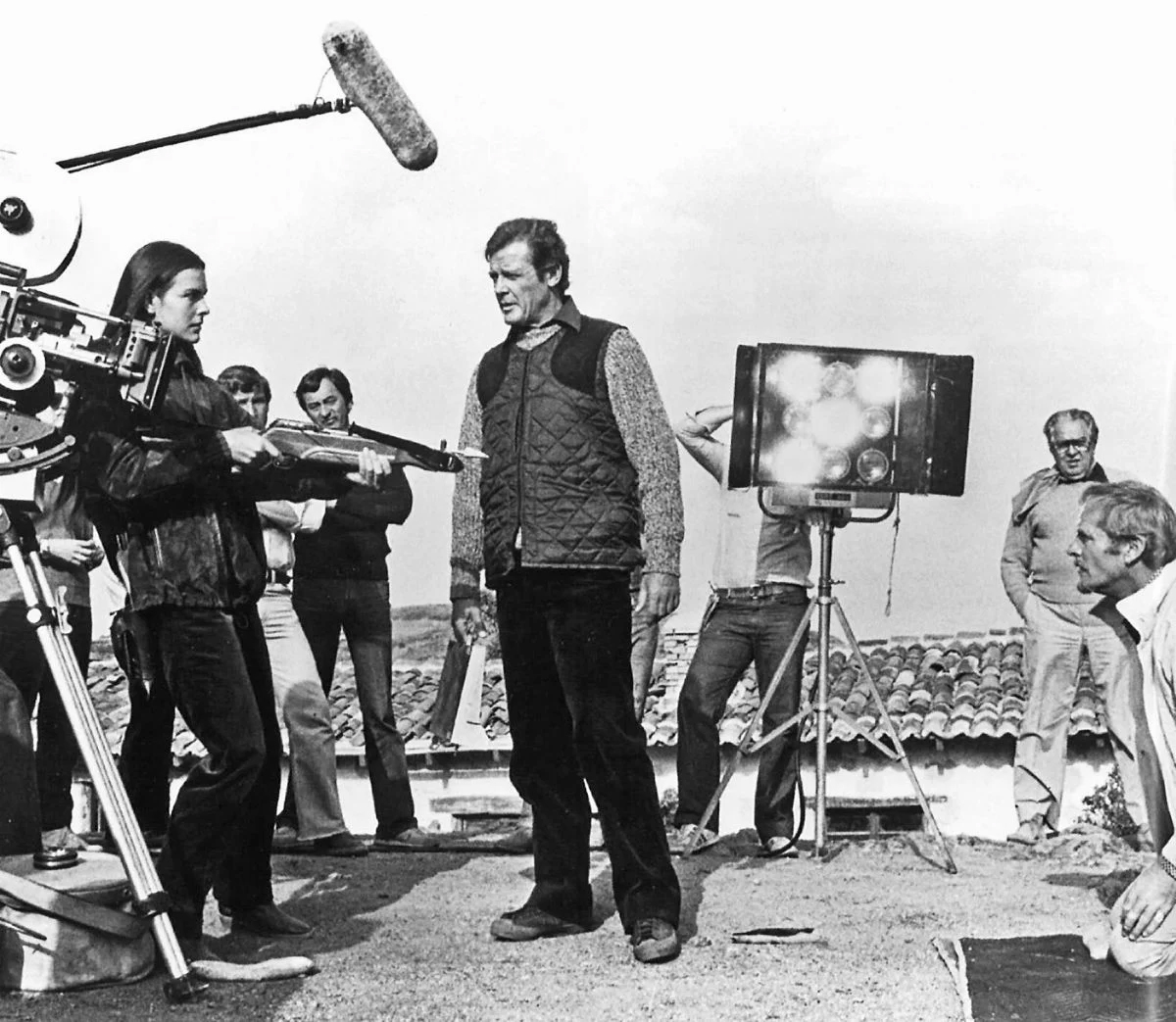
Hume was responsible for the main unit and prepared himself for anything that could happen — based on the script, but without having seen the locations beforehand. During the preparation period he was still shooting another film, so the location scouting was taken over by Arthur Wooster and his very experienced gaffer John Tythe from Pinewood Studios.
Every day was a different ballgame, Hume wrote — and it always would be. Sun, rain, tide and time wait for no one, and producers and directors don’t like waiting too long either. The crew always tried to stay one step ahead, run when necessary, work all reasonable and unreasonable hours — all with the goal of having material they could be proud of at the end of the day. They had their problems.
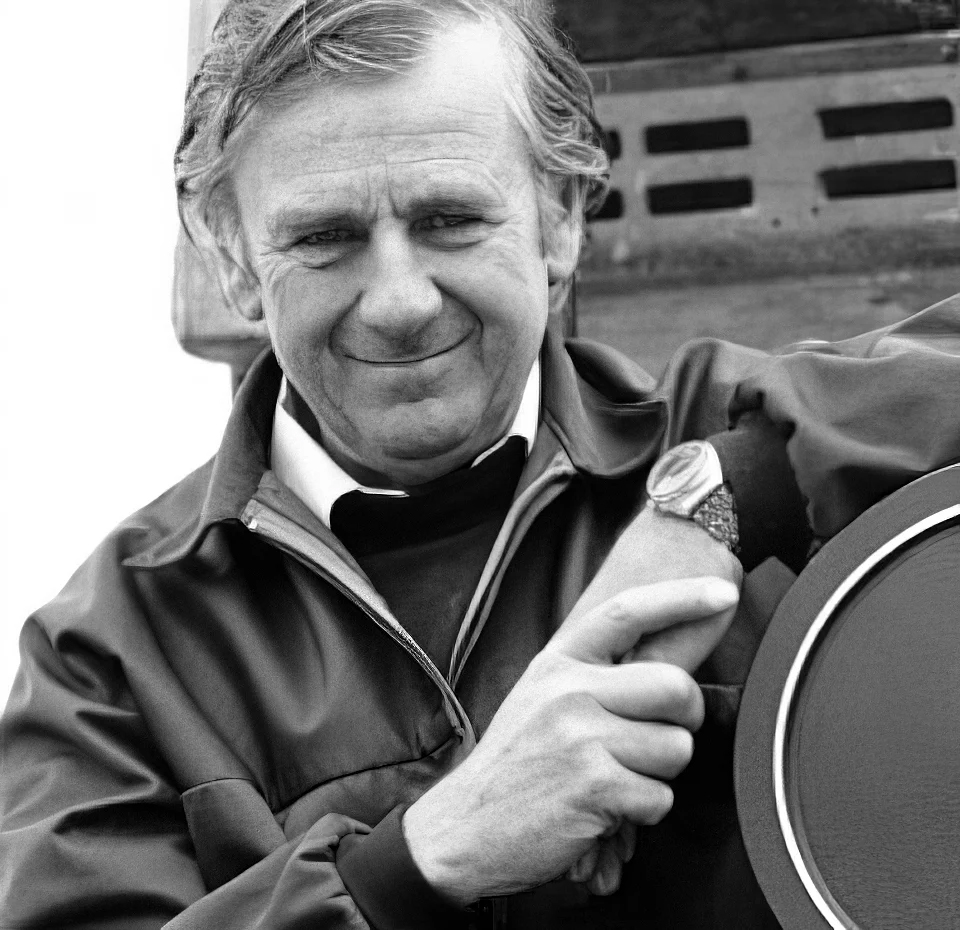
The director: John Glen
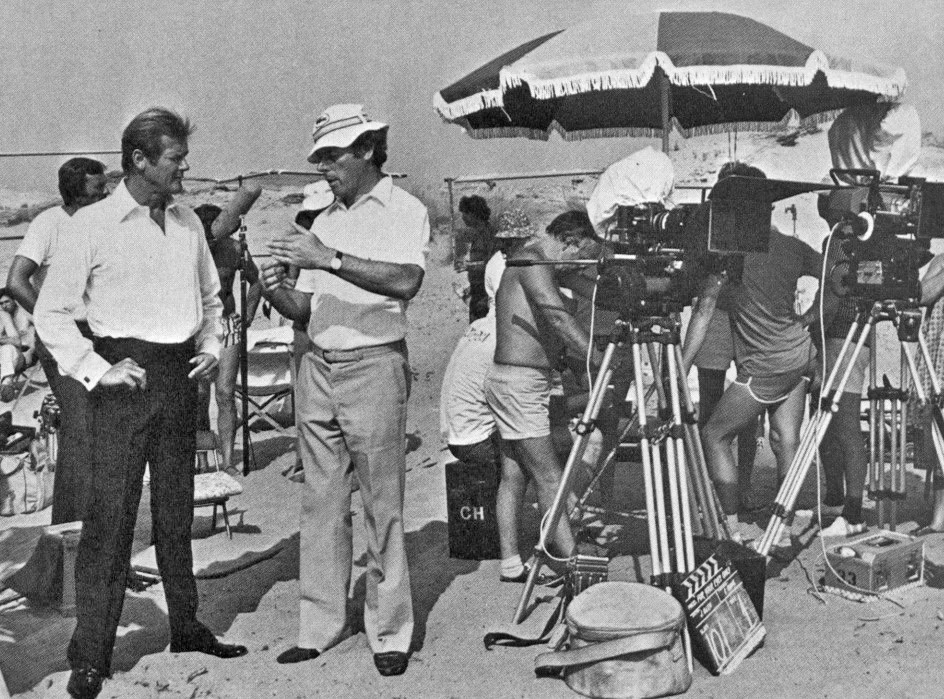
When producer Albert R. Broccoli asked him to direct For Your Eyes Only, Glen was initially speechless. But once the news had sunk in, he turned his thoughts to assembling the crew for the twelfth film in the most successful film series ever.
A natural successor to Ken Adam as production designer was Peter Lamont, who had been involved with most previous Bond films, both as set dresser and art director. Derek Meddings was another key figure they managed to secure as director of special effects.
Glen’s first choice as cameraman was Alan Hume, with whom he had previously worked on the legendary ski-parachute jump in The Spy Who Loved Me. Without Alan’s courage in placing the cameras on the edge of Mount Asgard in the frozen north of Canada, that scene would never have been shot. Glen would never forget the moment: Hume disappearing over the edge and reappearing, clinging to an enormous rock that hung beneath the tripod to give it stability.
For the three major underwater sequences, Al Giddings was invited, having previously shot the underwater scenes for The Deep. He came from Los Angeles to Pinewood Studios for a meeting. Storyboard artist Denis Rich had been working on sketches for weeks, and together they determined how the segments would be divided among the four units that would be shooting simultaneously at different locations.
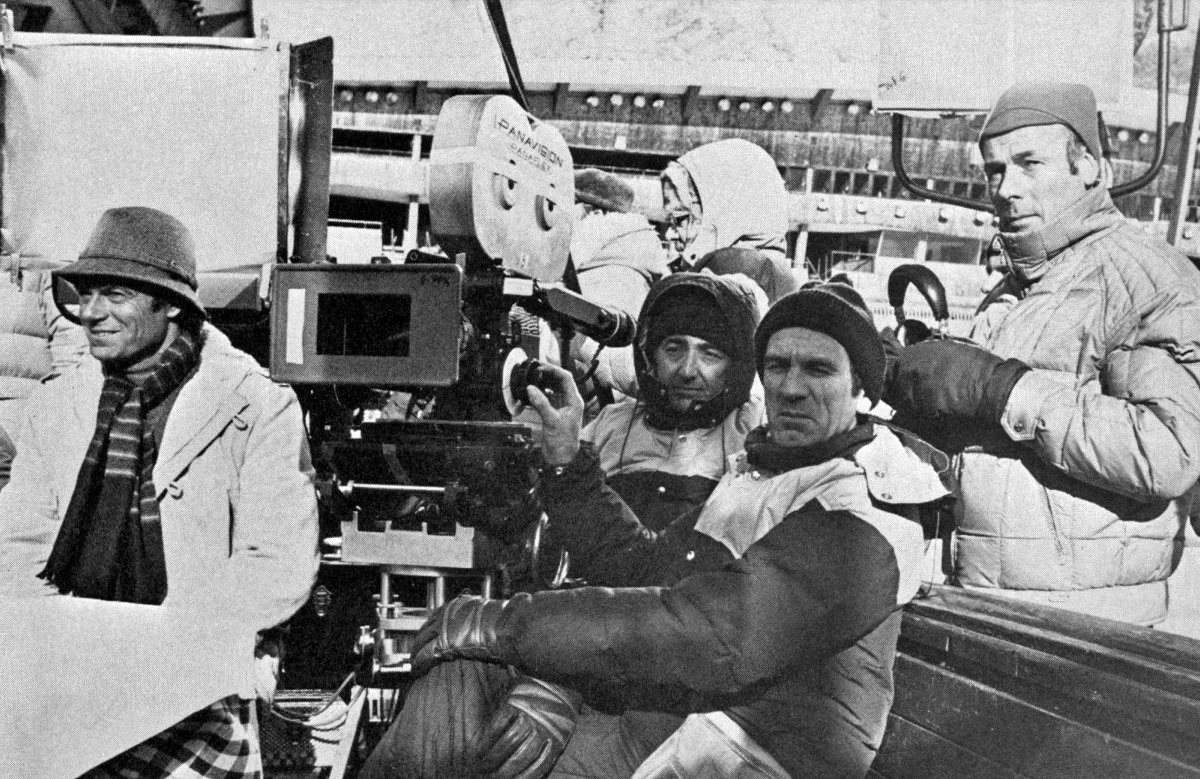
The location scouts were probably the shortest ever: the one on Corfu was completed in just two days! Michael Wilson drove the hired minibus and managed to land it in a ditch on the second day.
The very first shots were filmed on the North Sea. They were lucky: three gorgeous days with crystal-clear blue skies and glass-smooth water! The scene involved the sinking of a fishing vessel in the Ionian Sea. Glen had envisioned the camera starting underwater, with the trawler becoming visible as the camera rose to the surface. However, the waterproof camera housing the crew built turned out to be too heavy to lower into the water and was quickly replaced by a plastic bag.
Principal photography began in mid-September on the island of Corfu and the weather was glorious for the first three weeks. Rémy Julienne and his team of French stuntmen were hired for the car chase and later the ski/motorcycle chase, while Arthur Wooster and his second unit had great fun rolling cars.
Thrills on the bobsled run: Willy Bogner
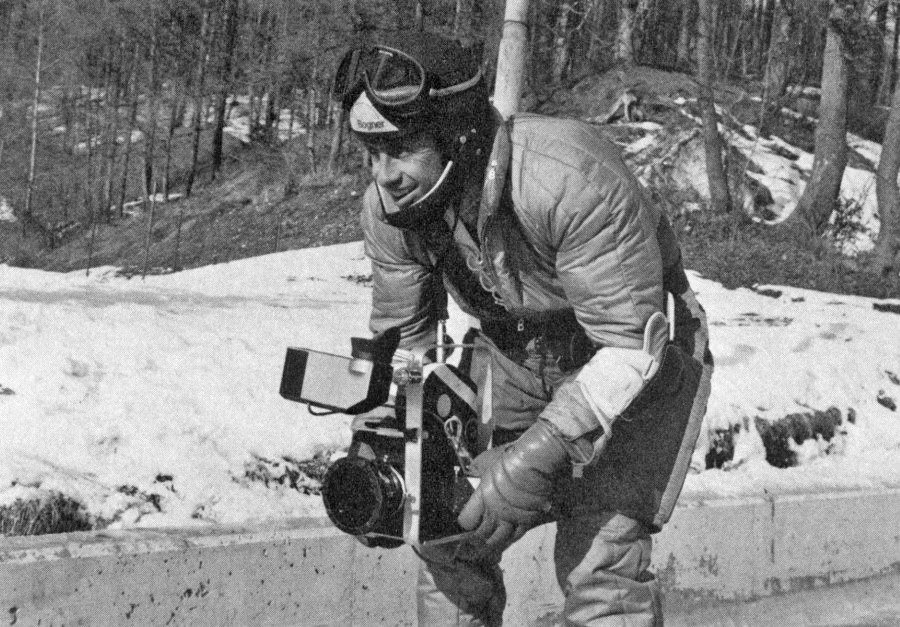
Bogner had already worked on two earlier Bond films as special cameraman for the ski scenes of On Her Majesty’s Secret Service and The Spy Who Loved Me. On For Your Eyes Only he got the chance to both direct and photograph the ski sequences. He was even allowed to write some of the material himself.
One of the most challenging sequences was a chase involving a four-man bobsled, James Bond on skis and a motorcyclist pursuing Bond inside the bobsled run, on the Olympic track at Cortina d’Ampezzo. Speeds ranged between 55 and 90 kilometres per hour.
To truly convey the ‘feel’ of the chase to the audience, Bogner decided to take shots on skis inside the bobsled run itself! He had skied in a bobsled run before for On Her Majesty’s Secret Service and knew it could be done by a skilled skier. His background as a former member of the German Olympic Ski Team helped enormously, but the actual filming brought its own challenges.
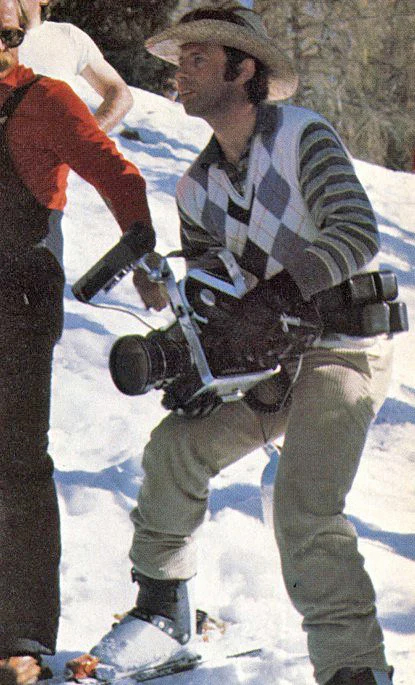
The solution: a handheld 35mm Arriflex III camera with a video camera on the side and a monitor on top. Thanks to the shock-absorbing effect of his knees and arms, he could keep the camera steady and capture good footage, even at high speeds. The Panavision lens on the Arri III was stripped of all unnecessary weight, but with the video monitor and two separate battery belts — for the Arri and for the TV unit — the total equipment weighed nearly 30 kilos!
In case he fell, Bogner wore the full gear of an ice hockey player, rented in Cortina. Fortunately he only fell once, and thanks to the protection neither he nor the equipment were harmed.
According to the plan, the bobsled would go first, Bond just behind and the motorcyclist in the background. Bogner was initially worried whether the motorcyclist could ride in a controlled manner on the steep walls of the run, but Rémy Julienne, the famous French stunt coordinator, reassured him. Julienne fitted the tyres with special spikes and arranged the right equipment. He assured Bogner they could reach speeds of up to 80 kilometres per hour inside the bobsled run! Three young Frenchmen performed the motorcycle stunts: Jocote, Bernard Pasqual and Dominique Julienne.
Miniatures and destruction: Paul Wilson, BSC
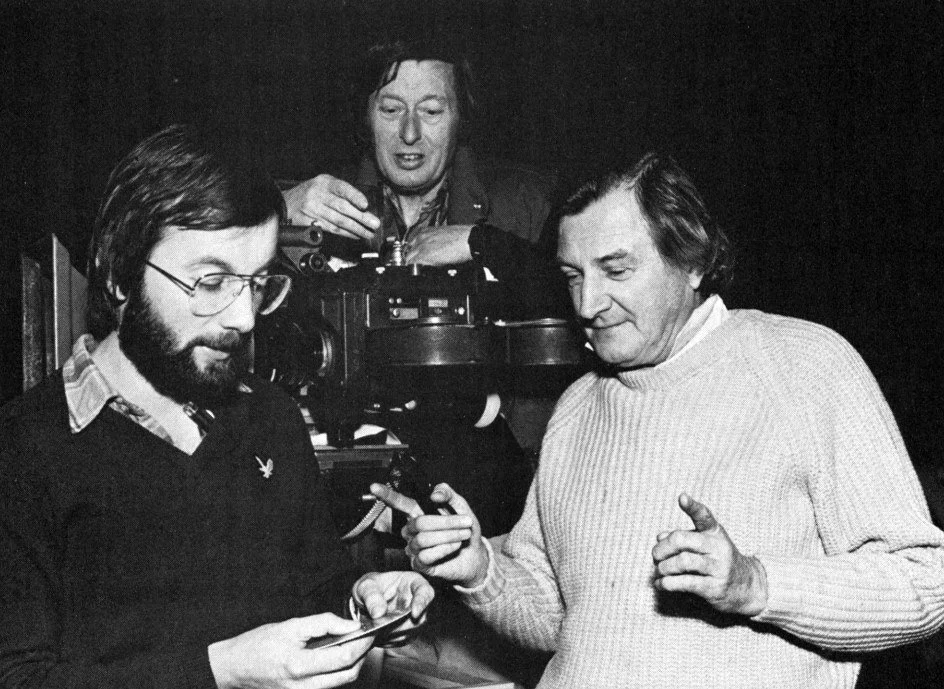
Paul Wilson’s first impression reading the screenplay was that it would not be as big a challenge as Moonraker. It looked as though most of the action sequences would take place at real locations with real vehicles and buildings, meaning less would need to be recreated on the effects stage. Apart from the sinking of the trawler St. George, everything was real — even the two-man submarine and the Mantis. But the challenges came from a direction he hadn’t expected.
In hindsight, Wilson said he had more headaches on For Your Eyes Only than on Moonraker. The reason: he had to seamlessly match his effects footage to live-action material already shot on location. What he filmed could not stand out for even a moment. And that’s exactly the point: when nobody notices the visual effects work, the cameraman has done his job.
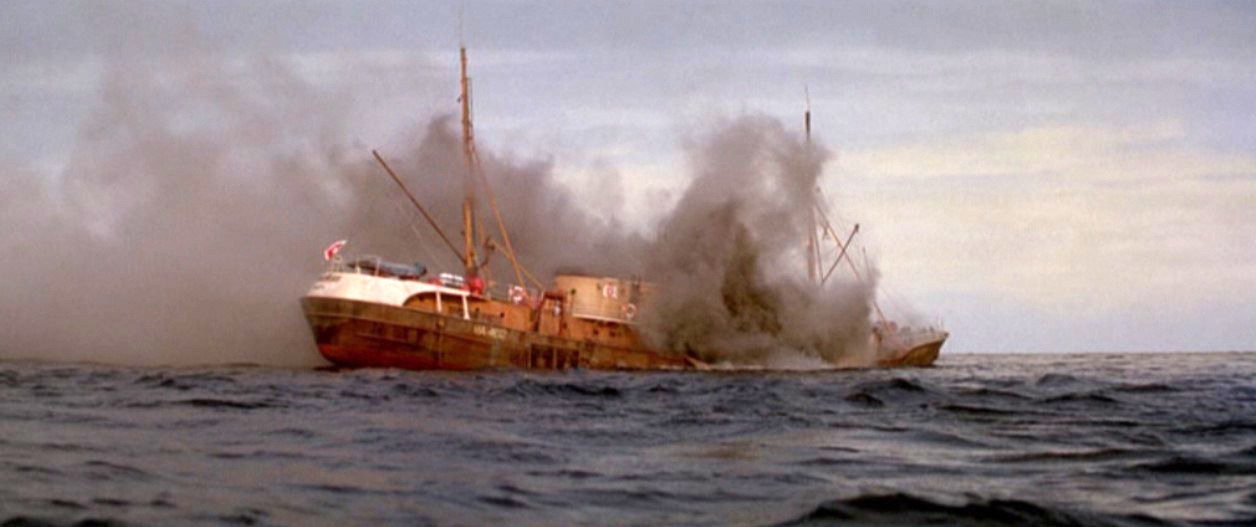
Naturally, the trawler could not actually be sunk, not even for a Bond film. The team had to replicate the lighting conditions and sea conditions from the second unit’s August footage in Pinewood’s outdoor tank — but in November. That’s no small feat in England: the sun is so low that the surrounding trees only cast no shadows on the backdrop for about two hours a day, in the middle of the afternoon.
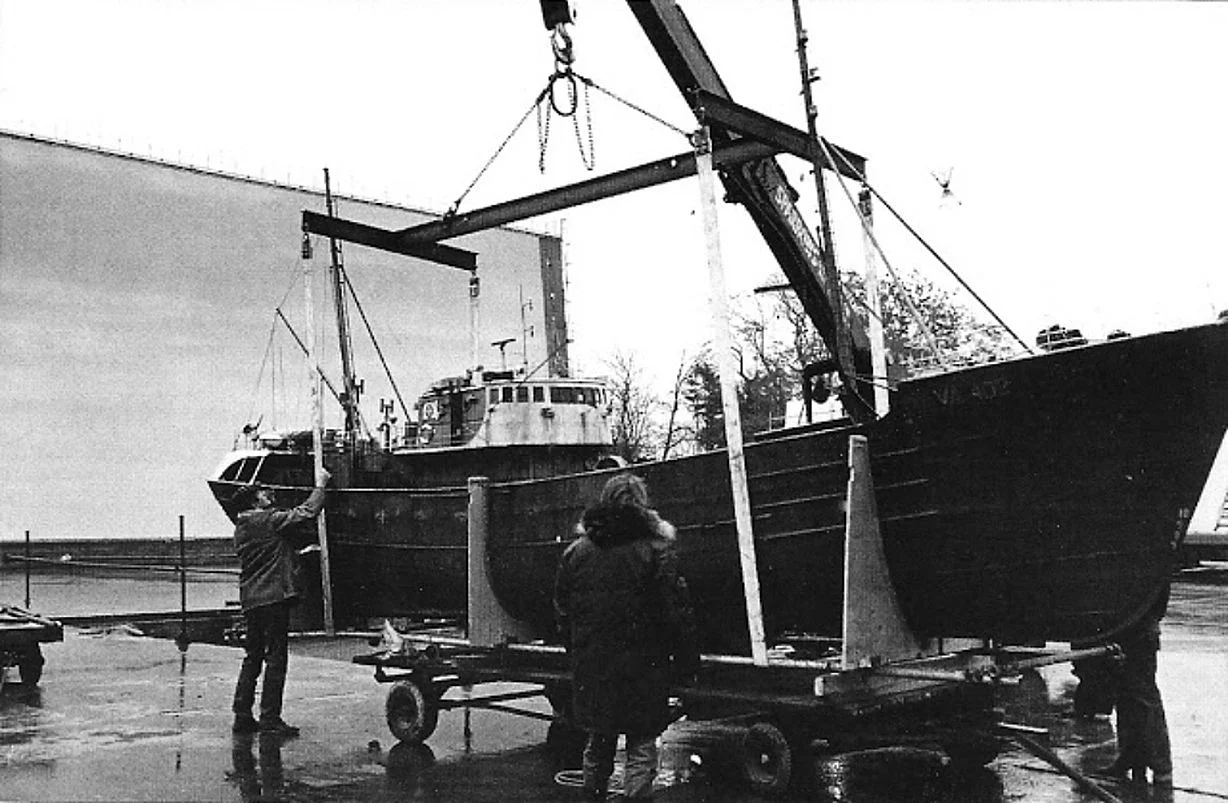
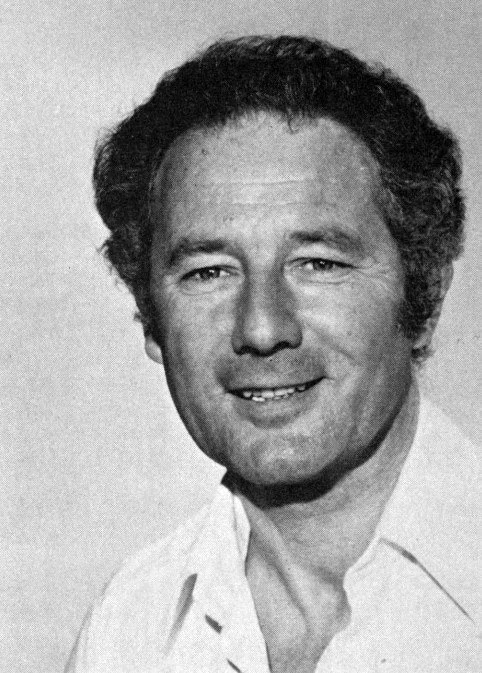
Derek Meddings’ team of model builders had to create an exceptionally detailed model of the St. George: after the trawler had been sunk in the outdoor tank, it was retrieved and reused underwater in the 007 Stage, where it was filmed at very close range.
The destruction of the warehouse in Albania (in reality the Greek island of Corfu) could not, for some reason 😉, actually be blown up. The entire harbour and its surroundings had to be recreated in miniature and destroyed at Pinewood Studios.
When scaling a set down to one fifth of its actual size, the lights must be scaled down too — a 10K becomes a 2K. But to convincingly convey scale and weight, the scene must be shot at five times normal speed, especially with explosions. The light that has become a 2K must retain that small size but deliver the light intensity of a 10K. The most useful lights Wilson found for this were the clip-on Jupiter Quartz units: very powerful, compact and easy to hide behind miniature walls and buildings. He used 60 of them for a single shot of the warehouse destruction.
The pre-title sequence: Jimmy Devis
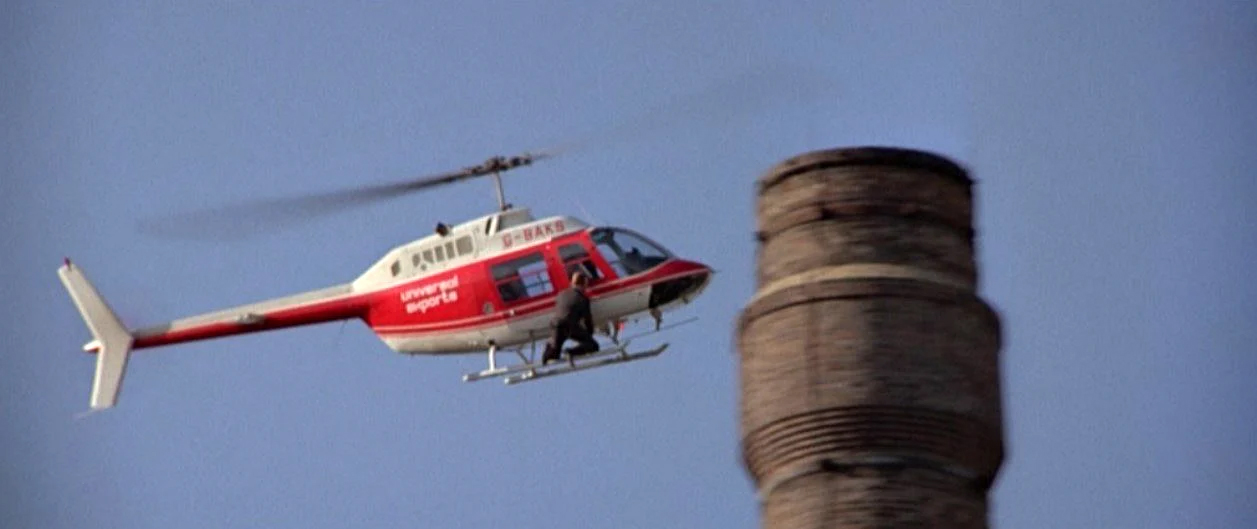
On returning from a film assignment in the US, Jimmy Devis received a phone call from the James Bond office: John Glen wanted him to direct the pre-title sequence of For Your Eyes Only. The year before, Devis had directed the battle scenes for Inchon by Terence Young, one of the earlier Bond directors.
As is usual on all Bond films, the challenge was to make the unbelievable look believable. Devis set off with the location manager to recce the place chosen by John Glen, cameraman Alan Hume and production designer Peter Lamont, before they left for Corfu.
At Becton Gas Works, situated on the banks of the Thames in East London, Devis met helicopter pilot Marc Wolff and aerial cameraman Al Werry. The two had worked together on countless films and commercials and were extremely well attuned to each other.
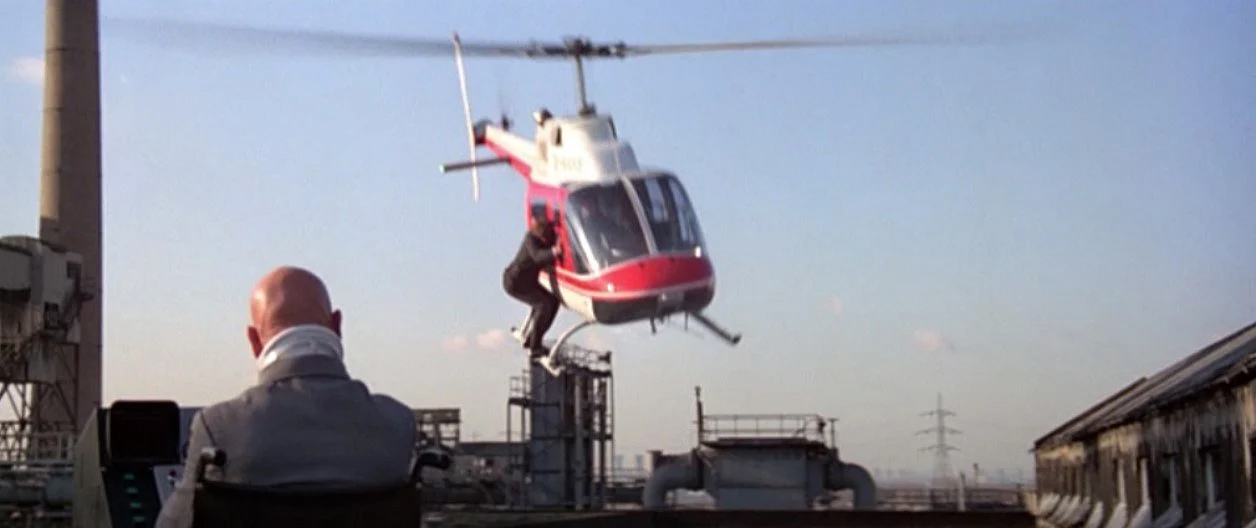
The four of them walked the course Devis had mapped out for them. Marc Wolff advised on what was possible: flying under and over steel structures, pivoting on a point, diving through buildings. They used a Bell JetRanger as Bond’s helicopter and an Alouette equipped with a Helimount as the camera platform. It could be mounted on either side or anywhere on the landing skids. Marc and Al had also fitted attachment points underneath, plus a seat on which Al Werry could sit outside the helicopter. It required exceptionally skilled flying, with all that wind resistance on one side.
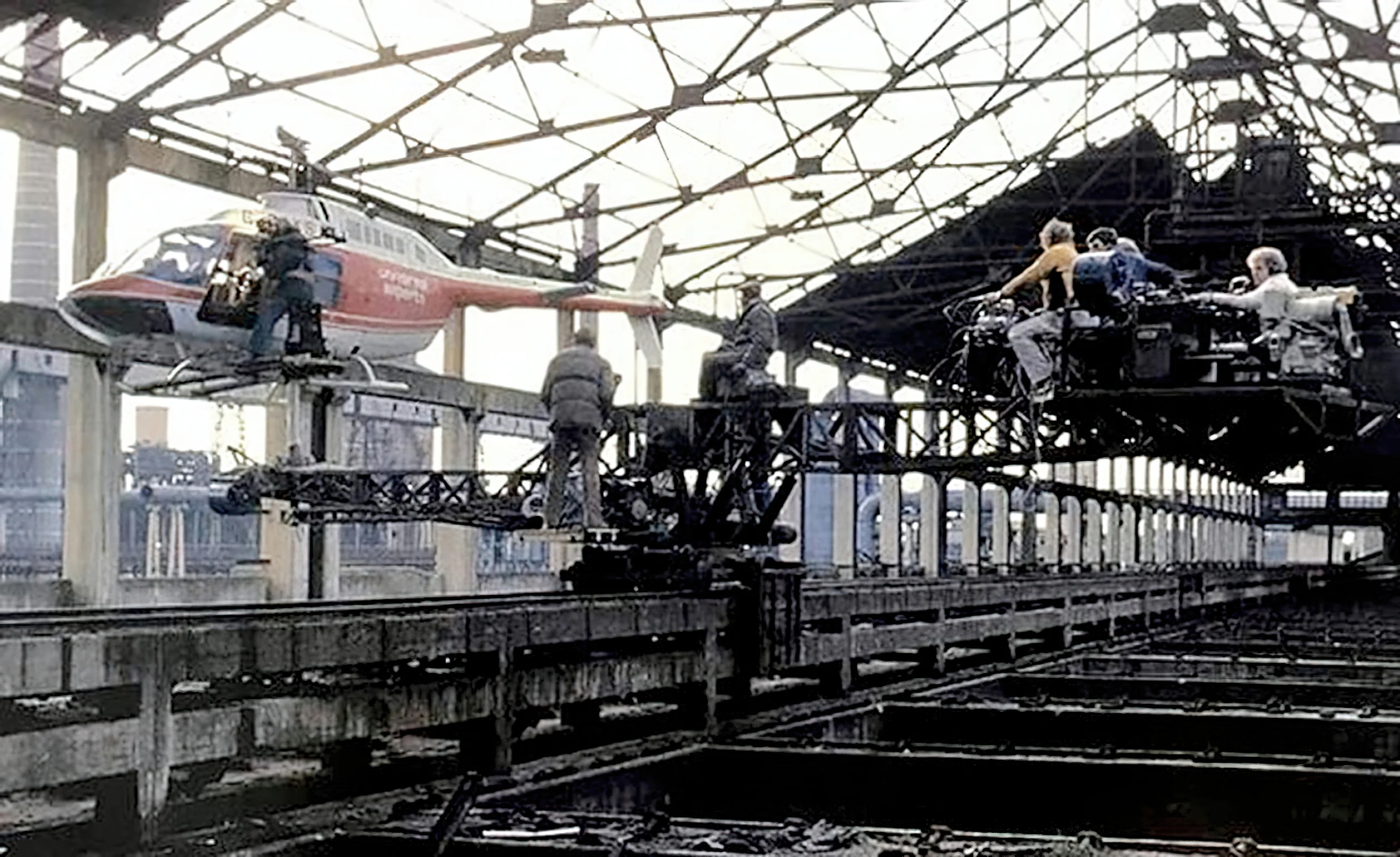
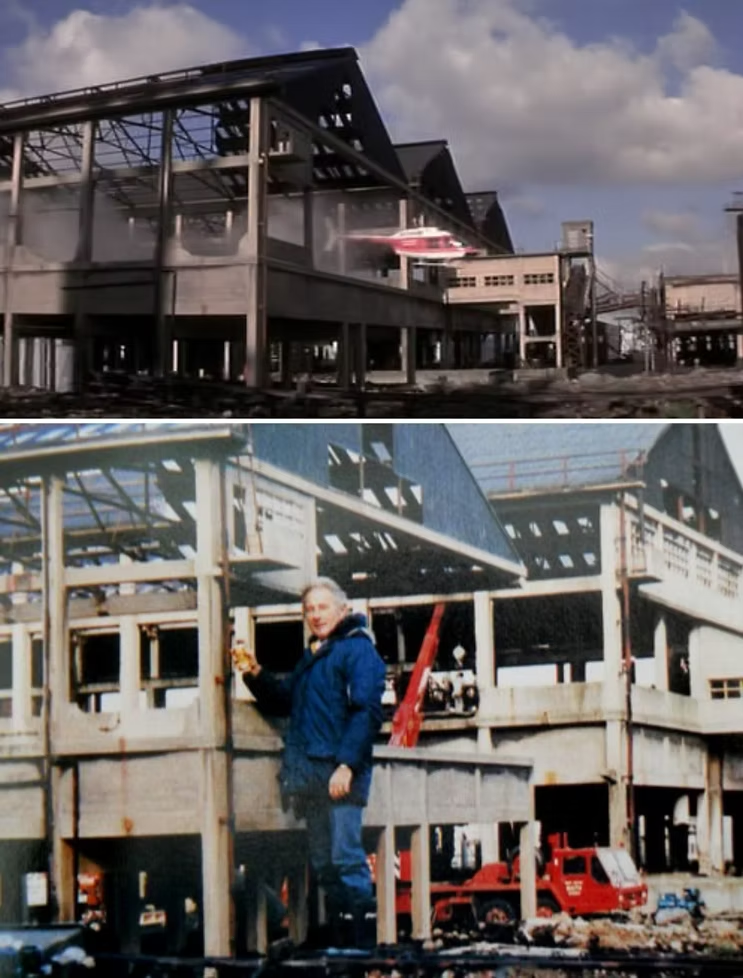
The filming took a total of three weeks. Derek Meddings was responsible for the foreground models. He also built a mock helicopter in one of the large derelict buildings, on roughly 300 metres of track, driven by a small motor. He could simulate flight by moving the helicopter via a hydraulic system he operated himself.
The pre-title helicopter sequence also required the help of the model unit. As Bond struggles to gain control of the radio-controlled helicopter, the aircraft is seen flying into an abandoned warehouse, circling around and coming back out. Two foreground miniatures were built by the art department and carefully aligned with the real buildings. The helicopter flying towards the side of the real building appeared to enter it thanks to the placed foreground miniatures — a classic perspective trick from the pre-digital era.